
Plan Your Trip to Tarangire
Everything you need to plan a safari at Tarangire Nature Camp — the best time to visit, how to reach us among the baobabs, what to pack, and what to expect on the ground.
Best Time to Visit
Tarangire rewards visitors year-round, and the character of the experience shifts with the seasons.
Dry Season (Peak)
Thousands of animals converge on the Tarangire River. Elephant concentrations are at their most spectacular from August to October.
Green Season
A lush, photogenic landscape and superb birding, with migratory species pushing the count well above 550. Newborn animals appear from January.
Always Rewarding
With its proximity to Arusha, Tarangire works as a standalone short safari or the perfect first or last stop on a northern-circuit itinerary.
Getting There
Tarangire is one of the easiest northern-circuit parks to reach from Arusha.
What to Pack
- Neutral, earth-toned clothing (khaki, olive, beige, brown)
- A light jacket or fleece — Tarangire is warmer, but mornings can be cool
- Wide-brimmed hat, sunglasses, and high-factor sunscreen
- Binoculars — highly recommended, especially for birding
- A camera with a decent zoom lens and spare batteries
- Comfortable walking shoes, insect repellent, and a headlamp
What to Expect at Camp
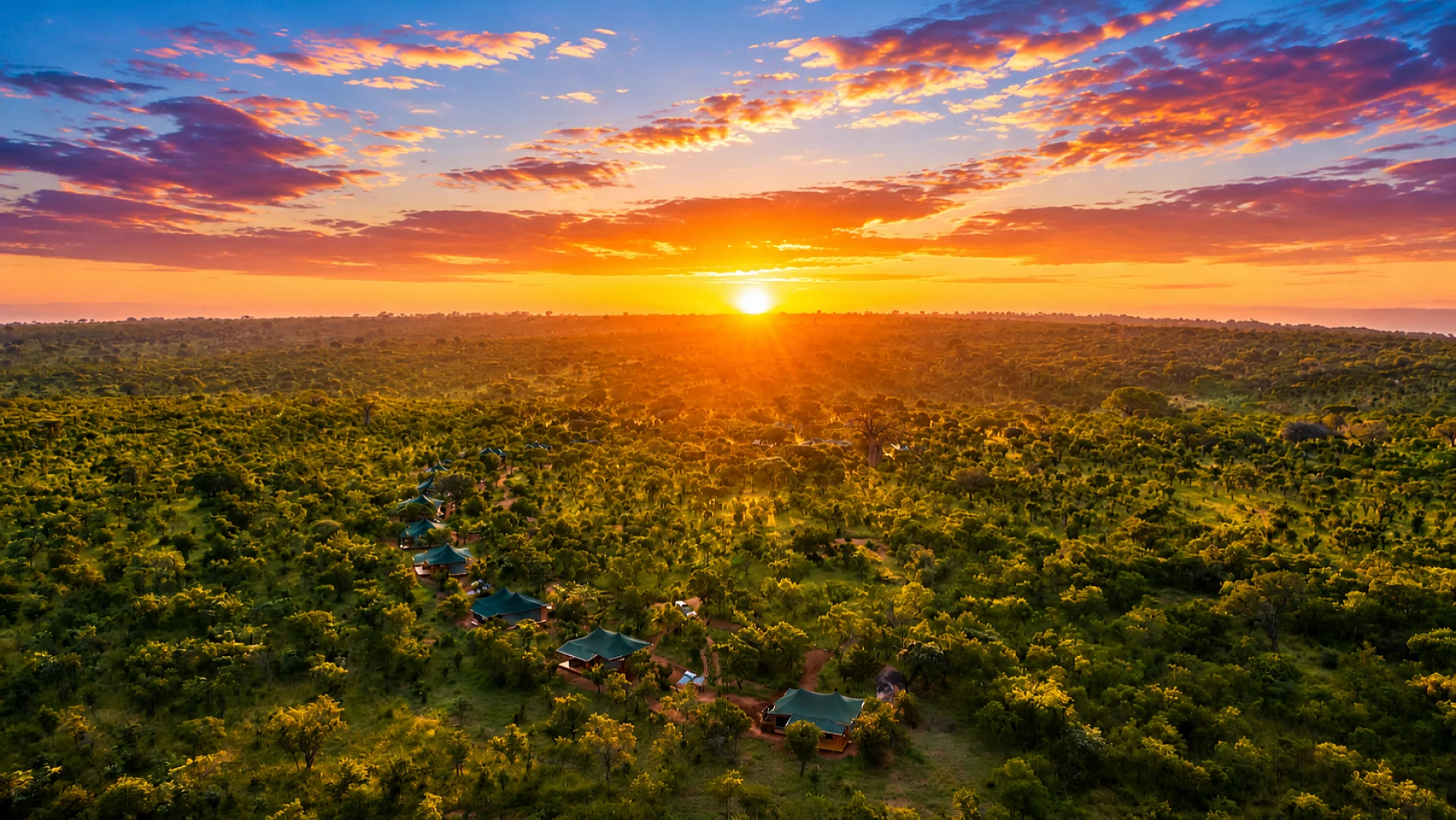
Ours is a small, low-impact tented camp in a wildlife-rich corner of Tarangire. A typical day begins before dawn with a morning game drive, when elephant herds gather along the river and predators are active, followed by brunch, a midday rest, and an afternoon or sunset drive before dinner under the stars. Night drives are not permitted inside the park, but evenings at camp have their own magic — the calls of hyenas and owls, and occasional guided spotlight walks around the camp perimeter.
Good to Know
Plan Your Safari
Answer a few questions and we'll craft a personalised itinerary. We respond within 24 hours.
Your information is secure and will only be used to plan your safari.