
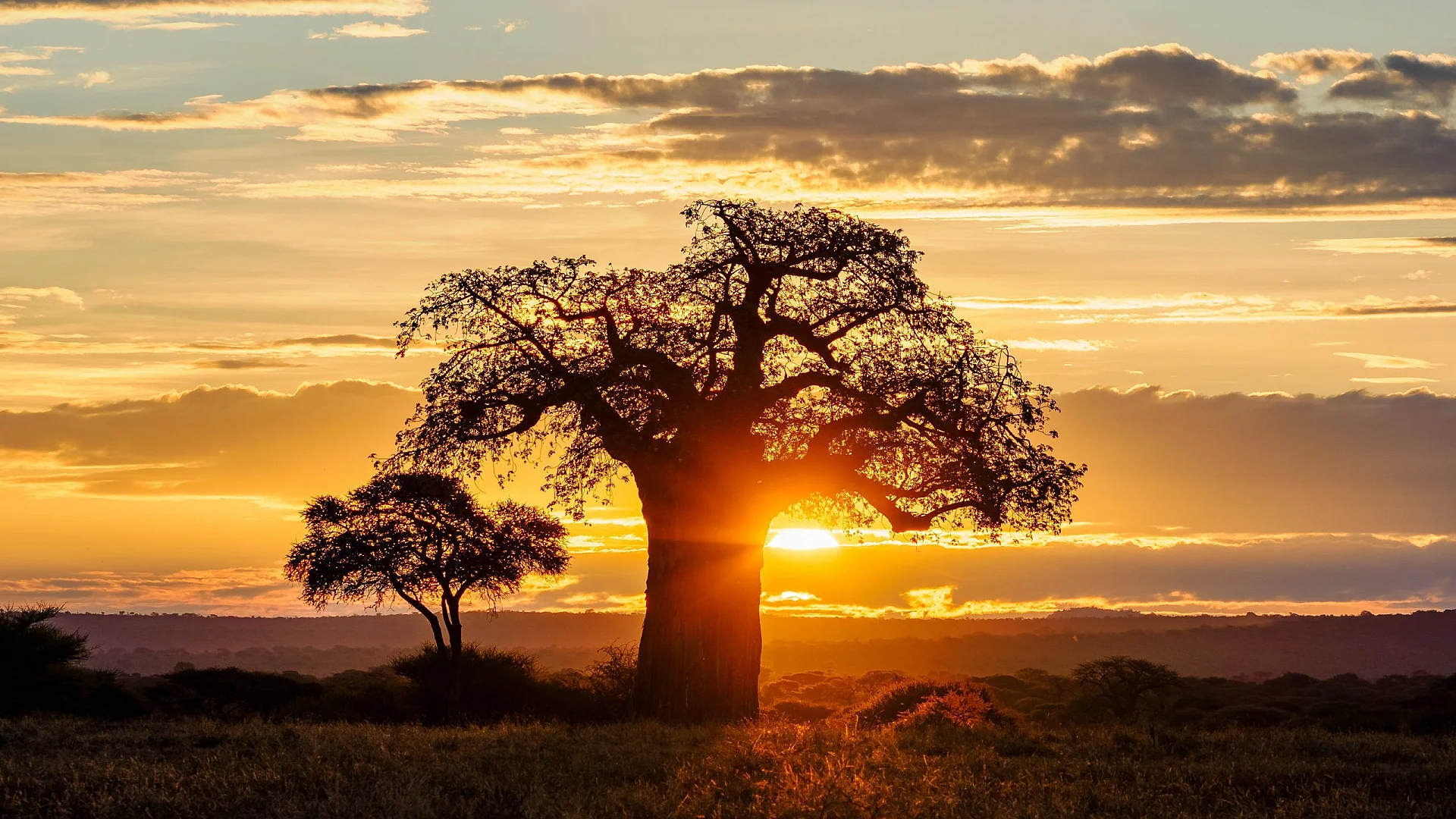
From the first elephant sighting at dawn to dinner under the Southern Cross, here is what a day at our Tarangire camp looks and feels like.
A Day at Tarangire Nature Camp: Morning to Starlight
Life at Tarangire Nature Camp follows the ancient rhythm of the bush — early mornings, long afternoons of stillness, and evenings lit by fire and stars. No two days are identical, but the shape of each one is familiar and deeply satisfying.
5:45 AM — Dawn on the River
You wake to the sound of birdsong filtering through the canvas — Yellow-collared Lovebirds chattering in the baobab canopy overhead, the liquid notes of a tropical boubou somewhere in the riverine undergrowth. A staff member brings a tray of tea and coffee to your tent veranda. From your elevated deck, the Tarangire River stretches below, its sandy banks still cool in the pre-dawn light. A family of elephants is already there — a matriarch and three calves drinking at the water's edge, their dark shapes silhouetted against the pale sand. You watch in silence, steam rising from your cup, as the sky shifts from deep indigo to gold.
6:30 AM — Morning Game Drive
Your guide meets you at the vehicle with a flask of hot coffee and freshly made mandazi. You head into the park as the rising sun illuminates the baobab trunks in shades of copper and bronze. The morning drive in Tarangire is a feast for the senses: the smell of dry grass and wild sage, the distant rumble of elephant communication, the flash of a Lilac-breasted Roller launching from its perch. Your guide navigates toward the flood plain, where herds of elephant, buffalo, and zebra are beginning their morning movements. A pair of lions rest on a termite mound, surveying their territory with half-closed eyes. The morning unfolds at its own pace — there is no rush in Tarangire.
10:00 AM — Breakfast at Camp
You return to camp for a full breakfast served in the open-sided dining banda. Fresh tropical fruit — mango, papaya, passion fruit — is followed by eggs, Tanzanian chapati, sausages, and toast with local honey. The Tarangire coffee is rich and dark, and the view from the breakfast table — baobab trees, the river, and the distant escarpment — is one you will remember long after the last cup is empty.
11:00 AM to 3:00 PM — The Quiet Hours
The middle of the day belongs to rest and reflection. Some guests read on their tent veranda, mesmerised by the parade of wildlife below — elephants coming and going from the river, vervet monkeys playing in the fever trees, a monitor lizard sunning itself on a rock. Others browse the camp's library of field guides and wildlife books, or write in their safari journal. There is a profound peace to these hours that is one of Tarangire's greatest gifts — the feeling of time slowing down, of the modern world falling away.
1:00 PM — Lunch
A light lunch is served in the dining area: fresh salads, grilled meats, Tanzanian-spiced rice, and fruit. The chef draws on local ingredients and Swahili culinary traditions, producing food that is flavourful and satisfying without being heavy. An afternoon cold drink — perhaps a glass of passion fruit juice or a cold Kilimanjaro lager — accompanies the meal.
3:30 PM — Afternoon Game Drive
The afternoon drive takes you through different areas of the park. As the heat eases, the bush comes alive again. Elephant herds move back toward the river, their grey forms lit by the golden afternoon sun filtering through the baobab canopy. A leopard might be found draped over a branch in the riverine woodland, its spotted coat blending perfectly with the dappled light. As the sun drops lower, your guide finds a sundowner spot — a clearing among the baobabs with a view across the Tarangire valley — and sets out drinks and snacks. You watch the sunset paint the sky in shades of peach and violet while the first stars appear overhead.
7:00 PM — Dinner by Firelight
Back at camp, the lanterns are lit and a fire crackles in the stone boma. A hot shower — the bucket shower heated over a wood fire — washes away the day's dust. Dinner is served by candlelight: a starter of soup or salad, a main course that might be grilled tilapia with coconut rice or slow-cooked beef stew with pilau, and a dessert of tropical fruit or freshly baked cake. Conversation flows easily — today's elephant encounter, tomorrow's plan, the sounds drifting in from the darkness.
9:00 PM — Starlight
After dinner, the campfire draws everyone in. The Southern Cross hangs low on the horizon, and the Milky Way stretches overhead in a luminous arc. An askari escorts you to your tent, the beam of his torch picking out the glowing eyes of a genet in a nearby tree. You fall asleep to the sounds of the Tarangire night — the bass grunt of hippos in the river, the distant call of a Scops owl, and the profound, enveloping silence of a landscape that has been essentially unchanged for thousands of years.
Share this article
Related Posts
Continue Your Journey
From the stories of the wild to the experience itself -- we would love to help you plan an unforgettable safari.