
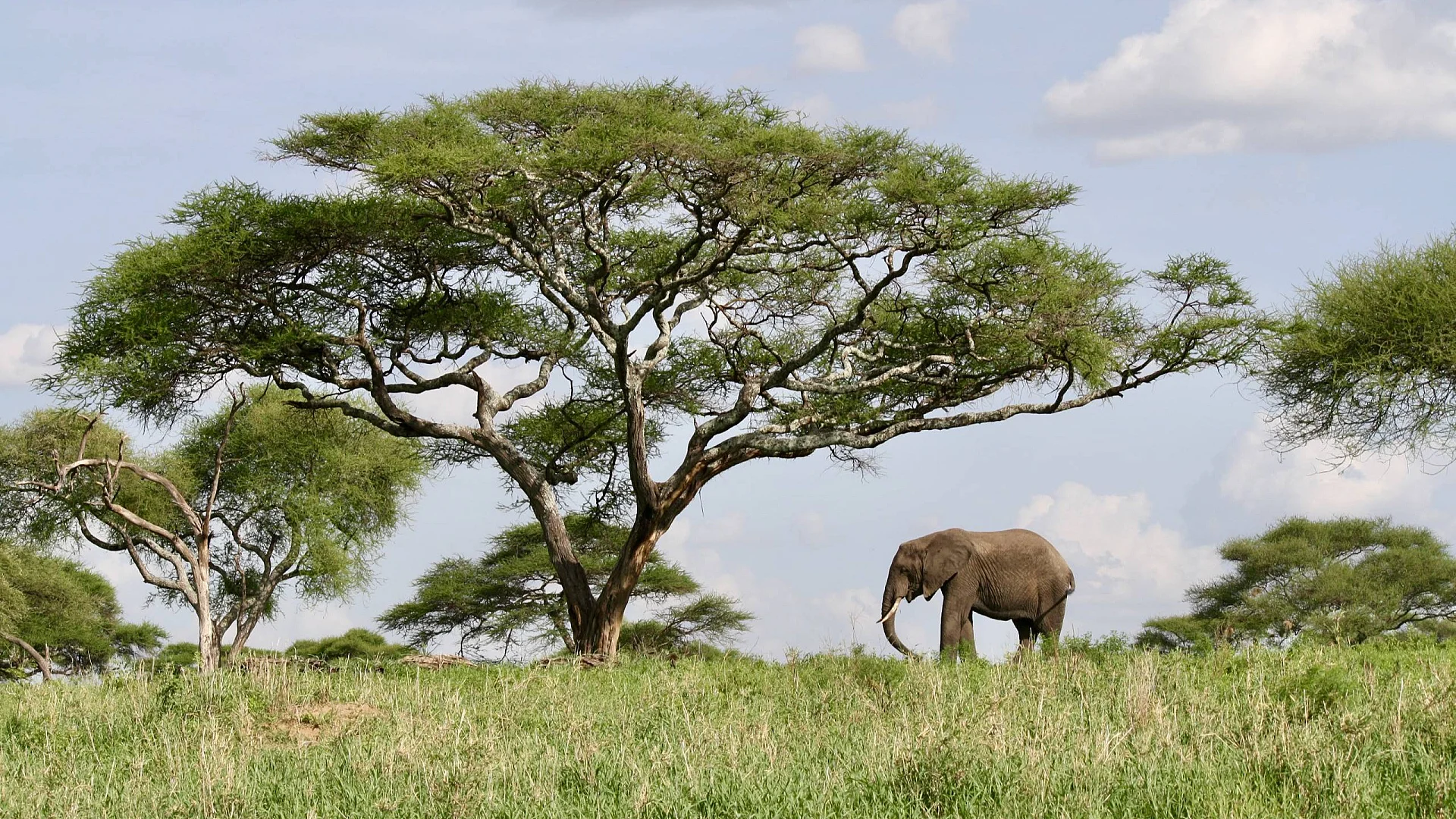
The science and geography behind Tarangire's extraordinary elephant concentrations — and why the dry season turns this park into an elephant spectacle.
Why Tarangire Has More Elephants Than Anywhere in Tanzania
Every dry season, Tarangire National Park transforms into one of the most spectacular elephant viewing destinations on the African continent. Herds numbering in the hundreds converge on the Tarangire River, and the sight of so many of these gentle giants moving through the ancient baobab woodland is one of East Africa's most moving wildlife experiences. But why does Tarangire attract such extraordinary elephant concentrations? The answer lies in a combination of hydrology, geography, and decades of conservation effort.
The River Factor
The Tarangire River is the only permanent water source in a vast area of semi-arid bushland that extends well beyond the park boundaries. During the wet season from November to May, water is abundant across the wider Tarangire-Manyara ecosystem, and elephants disperse widely across an area of approximately 20,000 square kilometres. But as the dry season takes hold from June onwards, seasonal rivers and waterholes dry up one by one, and the elephants begin their annual migration back to the Tarangire River. By August and September, when the surrounding landscape is parched and brown, the river is the last water for miles — and the elephants know it. Herds that have been scattered across the ecosystem for months converge in the park, creating concentrations that are simply breathtaking.
The Population
Tarangire's elephant population is estimated at approximately 2,500 individuals during the wet season, but during the peak dry months, this number can swell to over 3,000 as migratory herds from surrounding areas move into the park. The Tarangire elephant population is one of the best-studied in Africa, thanks to decades of research by the Tarangire Elephant Project, which has identified and tracked hundreds of individual elephants using ear-notch patterns and tusk configurations.
Social Structure
Watching Tarangire's elephants is a masterclass in animal social behaviour. Elephant society is matriarchal — each herd is led by an experienced older female who carries decades of accumulated knowledge about water sources, migration routes, and danger. When multiple family units converge at the Tarangire River, you can observe the complex social dynamics that bind elephant communities: joyful greeting ceremonies where related families reunite after months apart, trunk-touching and rumbling vocalisations that communicate across distances, and the protective circle that forms around young calves when a predator is sensed nearby.
Conservation Success
Tarangire's elephant abundance is also a conservation success story. Tanzania has invested heavily in anti-poaching operations and community-based conservation programmes that protect the wildlife corridors connecting Tarangire to neighbouring protected areas. The establishment of Wildlife Management Areas on community lands surrounding the park has been crucial — these buffer zones allow elephants to move safely between the park and their wet-season dispersal areas, maintaining the ancient migration patterns that sustain the population.
When to See Them
Elephant viewing is excellent year-round in Tarangire, but the concentrations peak from August to October when the dry season is at its most intense. During these months, it is common to see herds of 100 to 300 elephants at a single stretch of river — a spectacle that rivals anything on the African continent. Even in the wet season, family groups are regularly encountered in the baobab woodland around our camp. At Tarangire Nature Camp, elephants are daily visitors — they frequently pass through the camp itself on their way to and from the river, providing unforgettable close encounters from the comfort of your tent veranda.
Share this article
Related Posts
Continue Your Journey
From the stories of the wild to the experience itself -- we would love to help you plan an unforgettable safari.